
An expert roster with no performance data is useful for narrowing the field but cannot tell you, when the next call opens, which candidates have delivered excellent work under pressure and which have submitted deliverables that required significant revision before they met the standard.
That gap matters most at selection time and is usually the hardest to close, because performance data from past assignments lives in individual memories, informal notes and conversations that are never systematically captured.
What a structured evaluation captures
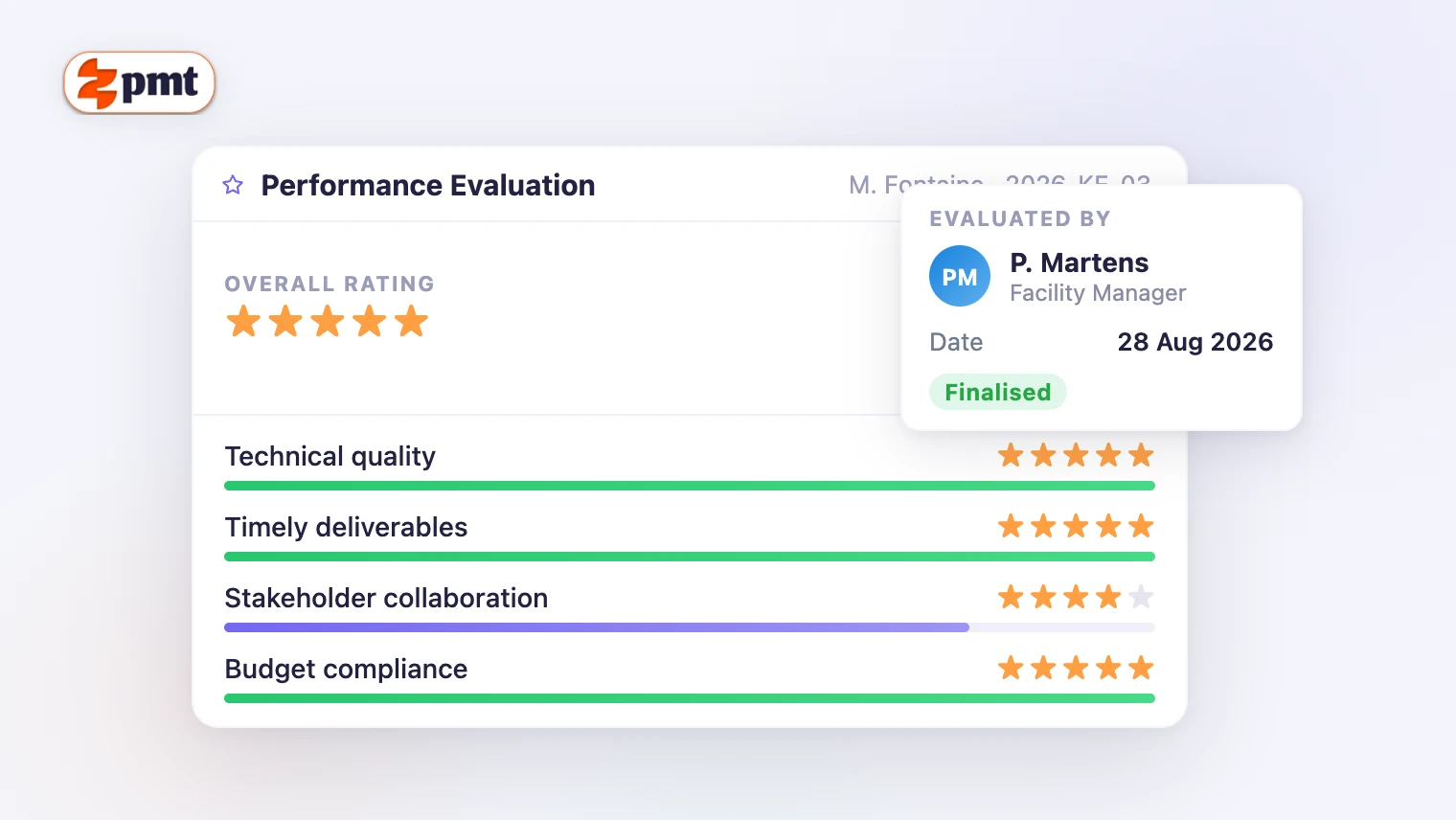
A performance evaluation after an expert assignment does not need to be a complex document. The information that compounds over time is specific and bounded: was the assignment completed on time, did the deliverables meet the quality standard, how did the expert collaborate with the receiving institution, were there issues with logistics or conduct that should be noted.
The value lies in its consistency and its connection to the expert's profile. An evaluation that produces a score across five dimensions, written by the same team using the same criteria each time and attached to the expert's record in the roster, is something you can compare, filter and act on. A conversation or a two-line note in a personal email is not.
What is lost when evaluation is informal
Facilities that do not systematically evaluate expert performance still have quality information; it is just privately held and unsystematically shared.
The programme officer who has worked with an expert twice knows their value well. When that officer leaves the programme, the knowledge does not transfer. The roster entry for the expert looks identical to the entry for someone who has never been deployed: a CV, a qualification, a field of expertise. The institutional judgment that would make the selection faster and better has evaporated.
Beyond succession, informal evaluation creates selection risk. Without documented performance history, selection decisions are harder to defend. When a donor or partner questions why a particular expert was chosen over another, "we had good experience with them previously" is not evidence. A structured evaluation record is.
How it feeds into future calls
When performance data is attached to the roster at the individual profile level, it changes the character of every subsequent call for expertise.
The programme team reviewing applications can see how each candidate performed in previous assignments alongside their credentials. Candidates with strong evaluation records can be prioritised or contacted before a call opens; those with mixed records can be assessed against the specific requirements of the new assignment with the relevant context in hand.
Over time the roster becomes more reliable with every cycle. Each assignment adds a data point, and those data points build a picture of the expert community the facility can rely on.
The bottom line
Each assignment that ends with a structured evaluation improves the next selection. That improvement only happens if the evaluation is structured, consistently applied and attached to the profile it concerns. When it is, the roster compounds in value over the life of the programme. When it is not, every selection exercise starts from the same incomplete picture it started from in the first cycle.