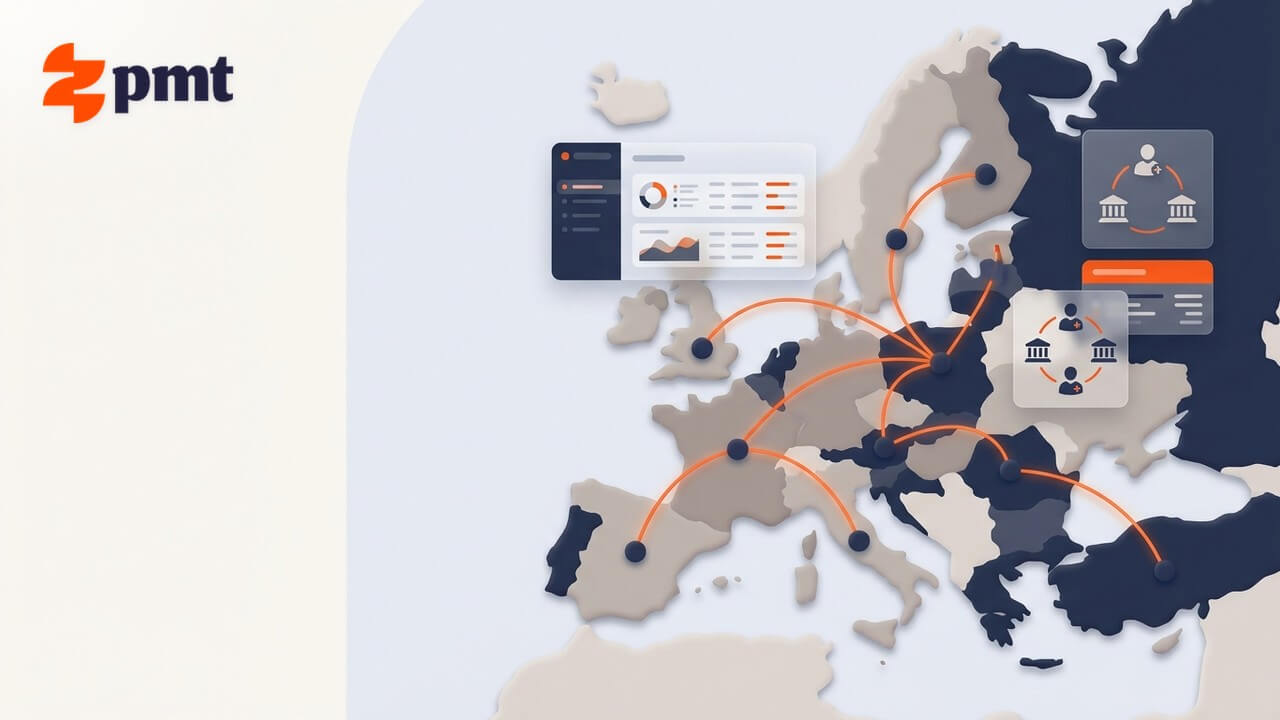
Peer-to-peer cooperation is one of the more elegant ideas in international development. Rather than parachuting in outside consultants, it mobilises expertise that already exists inside public institutions: a tax authority helping another tax authority reform, a statistics office mentoring its counterpart, a ministry sharing hard-won lessons with a peer facing the same challenge. The expert is a practising public servant rather than a career adviser, and that changes the quality of the assistance.
It also changes what the operation behind it has to be able to do.
The model's strengths are operational challenges in disguise
Everything that makes peer-to-peer valuable makes it harder to run.
- The experts have day jobs. A peer expert is mobilised for a mission and then returns to their substantive role. Availability is narrow, scheduling is tight, and mission days have to be tracked precisely because the expert's home institution is lending real capacity.
- The relationships are institution-to-institution. You are not managing a contract with an individual consultant. You are coordinating between a requesting institution, a providing institution and the individuals within it, with all the approvals and accountability that implies.
- The results have to satisfy several audiences at once. The requesting institution wants impact. The providing institution wants recognition and a clean process. The funder wants results-based evidence. Your reporting has to serve all three.
Each of these is manageable in isolation. The difficulty is that they compound, across many cooperation cycles running in parallel, in multiple countries, funded from multiple sources.
What the model asks of a facility
To run peer-to-peer cooperation well, a facility needs to hold several things together at once:
- A living map of expertise. Because peer experts are drawn from institutions rather than a consultant pool, the roster has to capture not just what someone knows but where they sit and when they are available. A static list cannot do this; a structured, maintained profile database linked to the activities each expert serves can.
- Transparent mobilisation. Calls for expertise have to be visible and fair. The legitimacy of the whole model rests on being seen to match the right peer to the right need, not on who happened to be asked.
- Precise workload tracking. Working days and mission days are the currency of the model. They determine what is owed, what is reported, and whether a providing institution feels its contribution was respected.
- Traceable accountability. With public institutions on both sides and public money in the middle, every decision needs an owner and a date. Accountability is what lets the model scale beyond a handful of trusted relationships.
Why the tooling has to fit the model
General project-management tools and generic M&E platforms can each do a slice of this. But peer-to-peer cooperation is defined by the connections between requests, institutions, experts, missions and results, and those connections are what generic tools drop on the floor.
A platform built for technical assistance facilities keeps the whole chain intact: this request, from this institution, matched through this call to this peer expert, delivered over these mission days, producing these results, reported to this funder. Hold that chain together and the model's complexity becomes manageable. Break it into disconnected tools and every cooperation cycle becomes a fresh act of reconstruction.
The bottom line
Peer-to-peer cooperation earns its place because the expertise is real and the relationships are institutional. But the model is only as strong as the operation that sustains it. Get the roster, the mobilisation, the workload tracking and the accountability right, all in one connected system, and you can run many cycles at once without losing the thread that makes each one credible.