
Every TA facility has a roster. Most rosters are, at their core, a collection of CVs: documents experts submitted at some point, stored somewhere, retrieved when a call opens. The CV tells you what the expert claims to offer. It does not tell you whether they delivered it, how they were assessed, or whether the facility would deploy them again.
A CV file gets you to a shortlist. A structured profile tells you what the expert delivered, how they were assessed, and whether the facility would deploy them again, so a selection decision can be made faster, with evidence.
What the structured profile contains
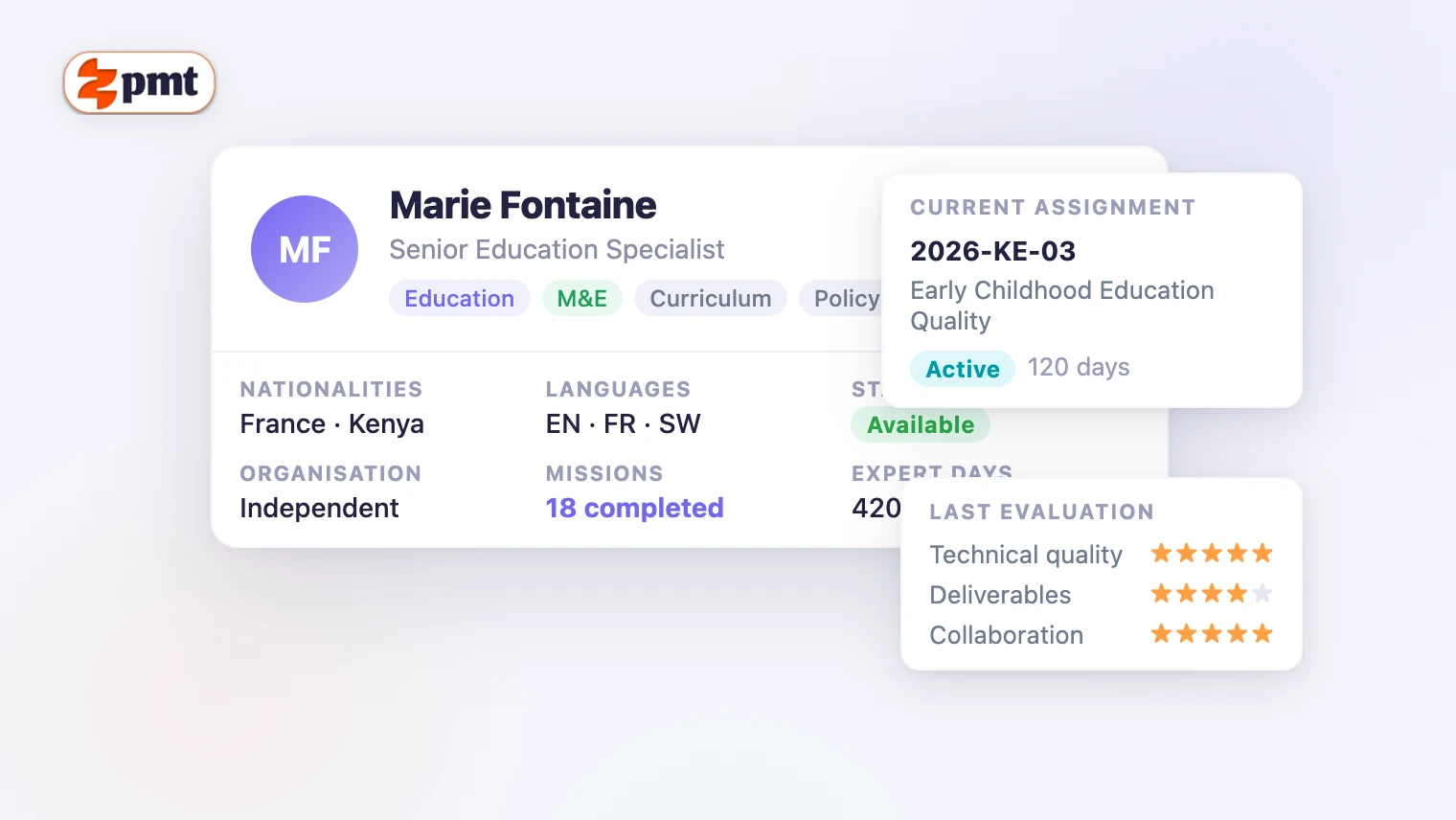
A structured profile is not a document. It is a record with defined fields, each carrying a specific operational purpose.
Professional classification: not a job title, but a position within the taxonomy the facility uses. That category determines which calls this expert is eligible for and which filters surface their profile in a search. Consistent classification across the roster is what makes search meaningful rather than decorative.
Sector and thematic tags: the areas of expertise the expert actually covers, tagged to the same vocabulary used on calls for expertise. When a call is published for a public financial management expert with experience in budget transparency reform, the tags are what surface the right profiles, not a keyword search through PDF text.
Geographic experience: countries and regions where the expert has worked, and whether that experience is recent. For peer-to-peer cooperation in particular, geographic familiarity is often a selection criterion, and it is one that changes over time.
Language proficiencies: working languages, at what level, relevant to which contexts. A language proficiency on a structured profile carries a declared level and context; in a CV it is text in a list.
Availability: when the expert is available for assignment. This is the field most often missing from CV-based rosters and most necessary for actual mobilisation. An expert whose profile shows no availability data requires a separate inquiry before they can be considered for a call.
Assignment history and performance
The fields above describe what the expert brings to a call. Assignment history and performance evaluations describe what they have done with it.
Assignment history is the list of engagements the expert has completed through the facility: the activities they were deployed under, the institutions they served, the working days they delivered. It is the factual record of the expert's track record in this specific operational context: their record with this facility, not their whole career (that is the CV's job).
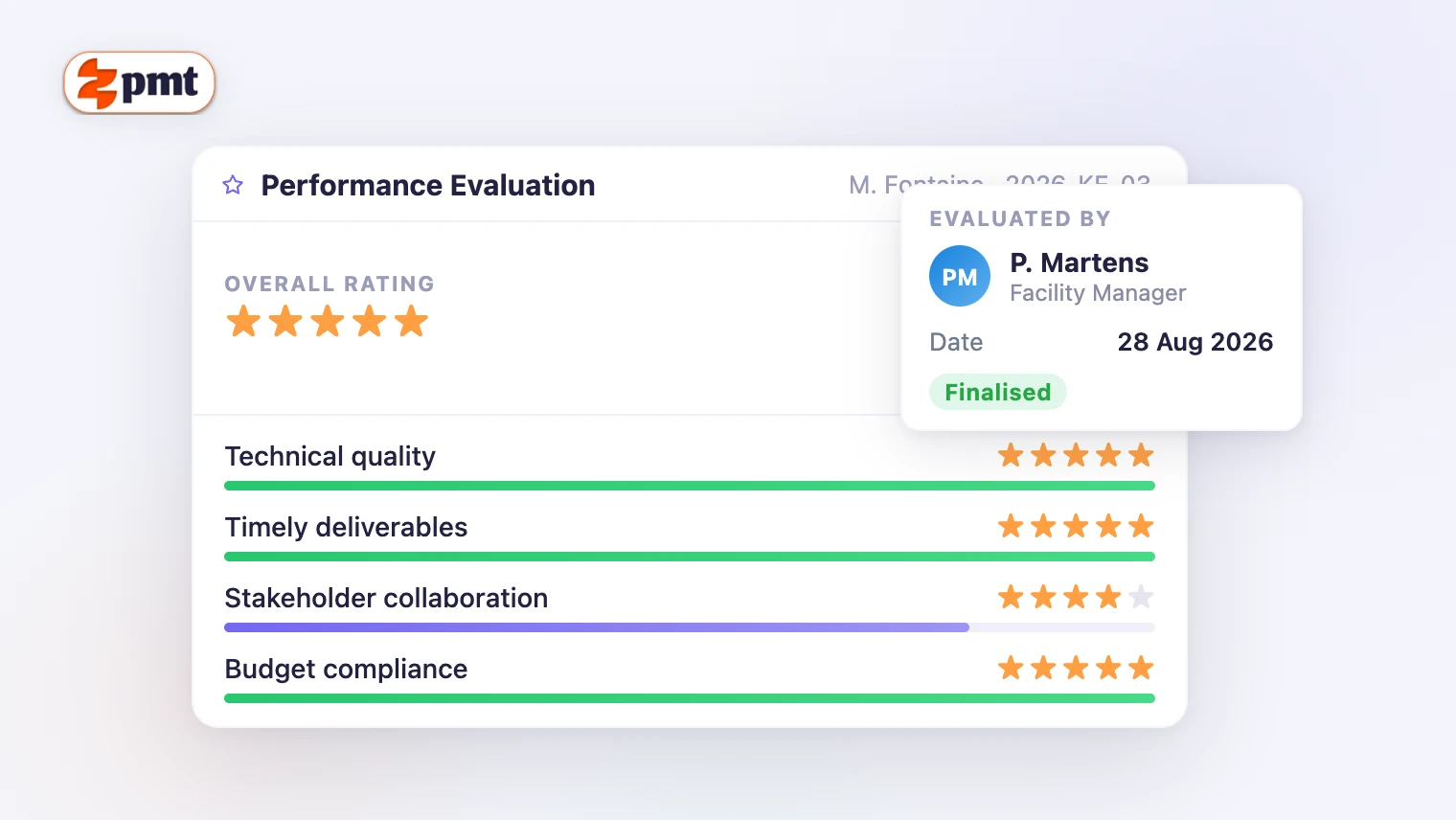
Performance evaluations are attached to each assignment in the history. A structured evaluation after every engagement, scored against consistent dimensions and written by the programme team using a shared framework, produces a record that accumulates with each cycle. After three assignments, the profile reflects three data points. After ten, it reflects something that can be relied on: a pattern of performance that is visible, comparable, and available at the moment a new selection decision has to be made.
Why the profile belongs to the expert
The most reliable way to keep a structured profile current is to let the expert maintain it. They know when their CV has changed. They know when a new assignment has added to their geographic experience. They know when their availability has shifted.
A self-service layer that allows experts to update their own profile, subject to review before changes become operative, removes the programme team from the role of data-entry intermediary and puts the data where it is most likely to stay accurate: with the person whose professional record it represents.
That shift also has an effect on engagement. Experts who maintain their own profile within a system they use to apply to calls are more invested in the accuracy of that profile than experts whose data is managed on their behalf by someone else.
The bottom line
Classification, sector tags, geographic experience, availability, assignment history and performance evaluations are each independently useful. Together, they make the roster a searchable, comparable, compounding asset that gets sharper with every call it runs and every evaluation it records, rather than starting from the same incomplete information each time a new cycle begins.